As an attorney, CPA, or financial advisor, you probably
work with several clients who own a family business. You’ve likely also
considered the role of strategic philanthropy in family business succession
planning to help clients get ready for an eventual exit. So how does strategic
philanthropy actually play out with a real client?
Consider Mark and Elaine, long-time
owners exploring a future sale. Financial projections confirm a liquidity event
would meet lifetime needs. The deeper questions are relational and
reputational: What happens to the family’s identity? How will their children
remain aligned?
An intentional charitable strategy can
provide a bridge.
By contributing a portion of closely
held shares to a donor-advised fund before a binding sale, clients may receive
a fair market value income tax deduction (subject to AGI limits), and the
fund’s share of sale proceeds can avoid capital gains tax.
Equally important, establishing the
fund before a transaction creates space to define mission, governance, and
next-generation engagement while the business is still operating. Philanthropy
becomes a unifying platform—preserving values and strengthening family
collaboration.
Our team can facilitate family
meetings, provide community insight, and support multigenerational
grantmaking—working alongside you as the lead advisor.
A business sale need not signal an
ending. With thoughtful planning, it can mark a pivot toward enduring legacy
and community impact.
Thank you for the privilege of partnership. Reach out to our team anytime. We are here to help you serve your charitable clients at every stage.
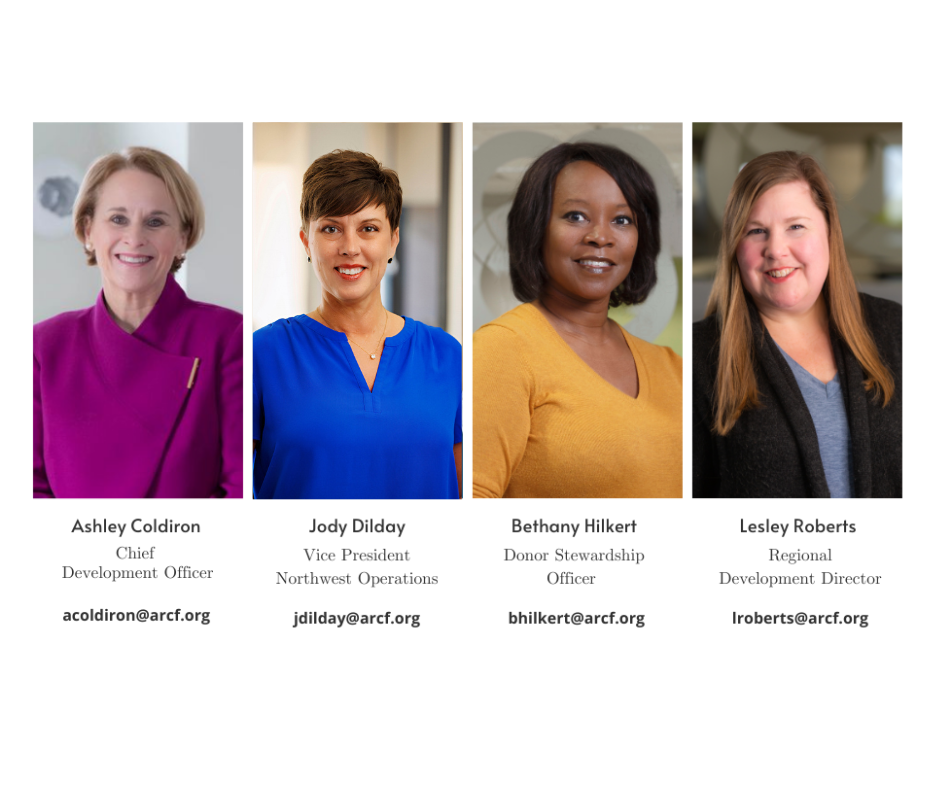
By Jody Dilday, Philanthropic Advisor
Recent rulings reinforce a familiar
but critical message: charitable tax benefits depend on strict compliance.
Strict substantiation matters. In Gibson v. Commissioner, a substantial noncash charitable deduction was disallowed—not because the gift lacked charitable intent, but because substantiation requirements were not met. Contemporaneous acknowledgments, qualified appraisals, and Form 8283 thresholds are statutory—not optional. Regular reminders to clients can prevent difficult outcomes.
Even
though you, as an attorney, CPA, or financial advisor may fully understand the
importance of following the rules, you still need to remind your clients
regularly. You don’t want a client to ask, “Why didn’t you tell us?” when they
learn the hard way that they should have kept better records.
Exempt status requires ongoing alignment. In Milk Saving Starving Children Foundation v. Commissioner, the IRS’s revocation of 501(c)(3) status was upheld when operations drifted from stated charitable purposes. The case is a clear reminder that mission and activities must remain aligned.
When clients consider supporting
lesser-known or newly formed organizations, please reach out. We can provide
due diligence insight and offer structured vehicles—such as field-of-interest
funds—to safeguard charitable intent.
Our goal is to help ensure your clients’ philanthropy is fulfilled with clarity, compliance, and confidence. Reach out to our team anytime We’re honored to be your first call when charitable giving comes up in client conversations.
By Lesley Roberts, Philanthropic Advisor
Because its Women’s History Month, March offers a natural moment to reflect on the evolving role of women in philanthropy. According to Indiana University’s Lilly Family School of Philanthropy’s Women Give 2024: 20 Years of Gender & Giving Trends, women are increasingly leading charitable decisions. This happens both gradually, as involvement deepens over time, and suddenly, when life transitions require them to assume full stewardship of financial and philanthropic assets.
Four practical considerations for your
practice:
1. Plan for consistency in giving. According to Women Give 2024 report, single women often maintain steady charitable participation even during economic downturns. Thoughtful planning can help sustain impact through life’s ups and downs.
2. Connect national trends to local
opportunity.
Giving to women’s and girls’ organizations has grown nationally. Our team can
provide local context and opportunities aligned with client priorities.
3. Ask about all forms of
philanthropy.
Affluent households are volunteering at increasing rates, and volunteers tend
to give more deeply. Ask about both financial support and volunteer
commitments.
4. Tailor advice for single women
households.
Participation patterns vary by household type. Intentional charitable
structures can help single women maximize both impact and planning outcomes.
Whether a client is launching a new fund, refining an existing strategy, or navigating inherited philanthropic responsibilities, we are honored to partner with you. Reach out to our team anytime We’re honored to be your first call when charitable giving comes up in client conversations.
A
few thoughtful steps early in the year can bring focus and confidence to your
giving:
Review your 2025 giving. We can help you understand the impact of your past gifts, identify patterns, and explore opportunities for the year ahead.
Talk with your advisors early. New tax laws make early coordination especially important. This is also a good time to revisit estate plans and beneficiary designations that may include charitable goals.
Set clear goals for 2026. Whether you want to support favorite organizations, respond to emerging needs, or involve your family in giving, we can help you create a thoughtful, flexible plan.
You
don’t have to navigate charitable planning alone. The Community Foundation is
honored to serve as your trusted partner—helping you turn generosity into
lasting impact for Arkansas, now and for generations to come.
A
new year presents an excellent opportunity to check in on your charitable
giving priorities. This is the case every year, but it is especially important
in 2026 because of a few new tax laws that may impact charitable giving
strategies for some people.
Here
are the changes that you’ll want to be aware of, and, most importantly, share
with your tax advisors as soon as possible. Feel free to forward this article
to your tax advisors, or print it and take it to your next
meeting.
New
threshold to itemize charitable deductions
One
of the most significant shifts affects individual taxpayers who itemize their
income tax deductions. Beginning this tax year, charitable contributions will
only be deductible to the extent that they exceed 0.5% of a taxpayer’s adjusted
gross income. In practical terms, this means that a portion of charitable
giving will no longer generate a tax benefit. For example, a taxpayer with an
adjusted gross income of $200,000 will see no deduction for the first $1,000 of
charitable contributions made in a year. Only donations above that amount will
be eligible for deduction, subject to existing percentage-of-income limits.
This new rule functions much like a deductible in an insurance policy, raising
the effective threshold for receiving a tax benefit and reducing the immediate
incentive for smaller annual gifts among itemizers.
Limitation
on itemized charitable deductions for high-income taxpayers
High-income
taxpayers will face an additional limitation through a new cap on the value of
itemized charitable deductions. Even if a donor is in the highest federal
income tax bracket, the tax benefit of a charitable deduction will be limited
to 35 percent of the contribution. As a result, taxpayers in the 37 percent
bracket will no longer be able to offset their income at their full marginal
rate when making charitable gifts.
Good
news for the 60% cap
Another
important change provides greater certainty for donors who make substantial
cash contributions. The long-standing rule allowing cash gifts to qualified
public charities to be deducted up to 60 percent of adjusted gross income has
been made permanent. After satisfying the new 0.5% AGI floor, donors may
continue to deduct cash contributions up to this level, while non-cash gifts or
contributions to certain types of organizations remain subject to lower
percentage limits. This permanence preserves a relatively generous framework
for major philanthropy even as other rules become more restrictive.
New
incentive for non-itemizers
The
new rules introduce an incentive for taxpayers who do not itemize deductions.
Beginning with the 2026 tax year, individuals who claim the standard deduction
will be allowed to take a limited charitable deduction above the line, meaning
it reduces income before adjusted gross income is calculated. Single filers may
deduct up to $1,000, while married couples filing jointly may deduct up to
$2,000, provided the contributions are made in cash. This deduction is
available in addition to the standard deduction and represents a meaningful
expansion of tax benefits for charitable giving among non-itemizers, many of
whom have received no tax benefit for donations in recent years. Note, however,
that gifts to donor-advised funds are not eligible for this deduction, and
neither are noncash gifts. This is unfortunate because both gifts to
donor-advised funds and gifts of highly appreciated assets are useful tools
that incentivize charitable giving.
QCDs
may be even more useful
Retirees
and older taxpayers will also see an important adjustment through an increase
in the Qualified Charitable Distribution limit. Beginning in 2026, the annual
amount that can be transferred directly from an individual retirement account
to a qualified charity will increase, allowing taxpayers age 70 ½ and older to
direct up to $111,000 to charitable causes without including those
distributions in taxable income. Because Qualified Charitable Distributions can
also count toward required minimum distributions, this higher limit enhances a
tax-efficient giving strategy that is unaffected by itemized deduction limits,
adjusted gross income floors, or caps on deduction value.
Limitations
on corporate charitable deductions
Corporate
donors are not exempt from the new framework. Starting in 2026, corporations
may deduct charitable contributions only to the extent that those contributions
exceed 1 percent of taxable income. Contributions below that threshold will not
generate a current-year deduction, although amounts that exceed applicable
limits may be carried forward to future tax years. This new floor is likely to
influence corporate giving strategies, particularly for businesses that make
consistent but relatively modest charitable contributions. The existing 10% cap
on corporate charitable deductions remains in place.
Again, we strongly encourage you to forward this information to your tax advisors. Please loop us into the conversation so that we can work alongside your attorney, financial advisor, and CPA to ensure that you’re set up to meet your charitable goals for 2026 through strategies that also align with your tax, financial, and estate planning objectives. Whether you cc us on an email, ask your advisor to get in touch with us directly, or pull everyone together on a quick call or Zoom, we are here for you and look forward to the conversation!
Little
Rock, Ark.
(Feb. 2, 2026) – Arkansas Black Hall of Fame Foundation, in partnership
with Arkansas Community Foundation, is providing funding opportunities for
nonprofits that serve African American or underserved populations in Arkansas. Eligible
nonprofits with programs focused on education, health and wellness, youth
development, strengthening families and economic development are encouraged to
apply. Proposals will be accepted online now through April 1.
“We are incredibly thankful for the
generosity of our donors and sponsors. Their continued commitment makes it
possible for us to support grassroots organizations that are creating
meaningful impact in communities across Arkansas,” said Charles Stewart, ABHOF
chair. “As challenges evolve, it remains essential to invest in organizations
working tirelessly to improve the quality of life for our citizens.”
Since
2004, ABHOF has granted more than $875,000 to nonprofits across the state.
These awards, funded by donors to Arkansas Black Hall of Fame, have included
support for mental health support groups, financial literacy workshops, and
other initiatives that empower communities and improve quality of life.
“We
are grateful for our continued partnership with Arkansas Black Hall of Fame
Foundation and proud to administer this grant cycle in support of organizations
serving communities across Arkansas,” said Jessica Ford, president and CEO of
the Community Foundation.
Criteria for funding:
Funds from Arkansas Black Hall of Fame Foundation
cannot be allocated for salary support or to support general operating budgets
outside the specific proposal or project.
Priority consideration for grants:
Potential
benefit to the community
Capacity of
the organization to achieve the results outlined in the application
Evidence of
a plan for evaluating outcomes
Potential
for sustainability beyond the grant period
Evidence of
cooperation or collaboration with other organizations
All geographic sections of the state are
eligible. Only 501(c)(3) nonprofit organizations, hospitals, public schools,
and government agencies are eligible to apply now through April 1 athttps://www.arcf.org/apply/nonprofits/apply-for-black-hall-of-fame-grants/. Organizations that do not qualify for
tax-exempt status are not eligible.
###
Arkansas Black Hall of
Fame Foundation aims to provide an
environment in which a future generation of African American achievers with
Arkansas roots will thrive and succeed. The Foundation honors the contributions
of African Americans through its annual Black Hall of Fame induction ceremony and
awards grants to support charitable endeavors in Black and other under-served
communities throughout Arkansas. Learn more at www.arblackhalloffame.org.
For 50 years, Arkansas Community Foundation has
helped Arkansans turn local generosity into statewide impact. Since 1976 the
Community Foundation has made more than $600 million in grants to support
Arkansas communities and manages more than $1 billion in assets. As part of its
50th anniversary year, the Foundation is making transformational statewide
grants and ushering in new leadership to guide its long-term vision for impact.
Working through 29 local affiliates, the Foundation partners with donors, professional
advisors, nonprofits and community leaders to engage people, connect resources
and inspire solutions to build stronger Arkansas communities, forever.
Little Rock, Ark. (January 21, 2026) – Arkansas Community Foundation is celebrating its 50th anniversary with a bold investment in the state’s future with more than $1 million in grants to Arkansas nonprofits and supporting a wide range of community needs in every corner of the state.
The anniversary grantmaking recognizes both the Foundation’s historic role in building community philanthropy across the state and its forward-looking commitment to data-driven funding. These grants seek to address the highest need areas and strengthen Arkansas communities for generations to come.
A press conference announcing the 50th anniversary grantmaking took place on January 21 at the Foundation’s headquarters in Little Rock. The event featured remarks from Linsley Kinkade, Chief Program Officer, along with representatives from the Foundation’s board of directors, staff, affiliate leaders from across Arkansas, and nonprofit partners representing this year’s grantees.
“For 50 years, Arkansans have shown that local generosity, multiplied statewide, creates lasting change,” said Tracy Cude, board chair for Arkansas Community Foundation. “These anniversary grants honor that legacy while investing in the next half-century of community leadership.”
Grants will support 47 nonprofit organizations through three
distinct grant tiers, designed to recognize long-standing nonprofit leaders,
rising nonprofits showing innovation and promise, and nonprofits locally chosen
by each of the Foundation’s 29-affiliates:
“Legacy Grants” were awarded to nine organizations
receiving $50,000 each.These nine grants celebrate nonprofits with a
proven record of statewide or regional impact.
“Rising Nonprofit Grants” were awarded to nine
organizations receiving $30,000 each.These nine grants highlight new, emerging
organizations shaping Arkansas’ future through innovative approaches and impact.
Twenty-nine $10,000 locally chosen affiliate grantees
were each selected by the Foundation’s local affiliate boards to meet the most
pressing needs in their communities.
The grantees represent a cross-section of Arkansas. From
rural to urban, Delta to Ozarks, and address a spectrum of issues including
education, food security, health, childcare, workforce development and more.
“Every grant tells a story of impact, whether it’s helping
students succeed, improving health outcomes, or addressing food insecurity,”
said Linsley Kinkade, chief program officer for Arkansas Community Foundation.
“By combining statewide data with local insight, we’re ensuring that these
anniversary investments create lasting value across Arkansas.”
A full list of nonprofits receiving these grants is available at arcf.org/50.
Grant decisions were guided by Aspire Arkansas data, the
Foundation’s publicly available community indicators resource. This
data-informed process ensures equitable investment across regions and focuses
funding on areas of documented community need.
This month, the Community Foundation is also ushering in new
leadership following the retirement of longtime CEO, Heather Larkin. Jessica
Ford, formerly the Foundation’s Chief Communications Officer, has stepped into
the role of President and CEO. “The Foundation enters this leadership
transition and milestone from a position of fiscal health and a culture built
on local trust and statewide collaboration,” said Larkin. “This moment
represents not an ending, but a new beginning for Arkansas philanthropy, and I
am confident in Jessica’s leadership.”
“I am honored to step into this role and to build on the strong foundation
Heather and our statewide network have created,” said Ford. “Our 50th
anniversary is a powerful reminder of what Arkansans can achieve together, and
I’m committed to carrying that momentum forward.
To learn more about the history of Arkansas Community
Foundation and to find more information about each grantee, visit
arcf.org/50.
###
For 50 years, Arkansas Community Foundation has helped
Arkansans turn local generosity into statewide impact. Since 1976 the Community
Foundation has made more than $600 million in grants to support Arkansas
communities and manages more than $1 billion in assets. As part of its 50th
anniversary year, the Foundation is making transformational statewide grants
and ushering in new leadership to guide its long-term vision for impact.
Working through 29 local affiliates, the Foundation partners with donors, professional
advisors, nonprofits and community leaders to engage people, connect resources
and inspire solutions to build stronger Arkansas communities, forever.
Qualified Charitable Distributions (QCDs) come up frequently in
planning conversations, but the logistics can feel complex. Here’s a concise
example to illustrate how to navigate them with confidence.
Scenario:
Margaret, age 74 and a longtime client, schedules a meeting to discuss
charitable giving. She recently began taking required minimum distributions
(RMDs) from her IRA and is concerned about her taxable income. She already
maintains a donor-advised fund at the Community Foundation and enjoys both the
structure and the community connection it offers.
During the meeting, Margaret asks whether a QCD would make sense in 2026, especially if she can direct it to the Community Foundation.
Advisor guidance:
You explain that a QCD allows anyone age 70½+ to direct IRA assets to qualified
charities without including those amounts in taxable income. After
RMDs begin (age 73), QCDs can satisfy all or part of the requirement and reduce
AGI—helping with Medicare premiums, Social Security taxation, and overall tax
efficiency. With inflation adjustments, the limit for 2026 is $111,000.
Margaret then asks if she can send her QCD to her donor-advised
fund. You clarify that current IRS rules prohibit QCDs to donor-advised
funds, even at a Community Foundation.
However, that doesn’t eliminate her options.
Eligible alternatives at the Community Foundation include:
Designated funds (support specific
nonprofits she selects),
Field-of-interest funds (support broad
causes like arts, education, or health),
Unrestricted funds (support local
needs as they emerge).
These structures are managed fully by the Community Foundation,
which is why they qualify for QCDs while still aligning with donor intent.
Margaret likes the idea but worries about selecting the right
option. You recommend a joint meeting with the Community Foundation to evaluate
fund types, draft the fund agreement, and ensure compliance with QCD rules. She
agrees, relieved that she doesn’t have to navigate the details alone.
Outcome: You will review IRA custodian requirements, and the Community Foundation will prepare the appropriate fund. Margaret’s 2026 RMD will support her community, reduce her taxable income, and reflect her values.
Takeaway for advisors: Clients often need help connecting the dots between tax tools and charitable intent. Partnering with the Community Foundation can simplify execution, strengthen client relationships, and support meaningful philanthropy.
Pro Tip: Tax laws evolve—sometimes in donor-friendly ways. A bipartisan proposal is currently circulating that would allow QCDs into donor-advised funds. Stay tuned!
The end of 2025 triggered an intense wave of charitable planning
as high earners sought to maximize deductions before the 0.5% AGI “floor” and
35% “cap” took effect on January 1, 2026. Donor-advised funds (DAFs) played a
major role, allowing clients to contribute assets in 2025 for optimal tax
results, then recommend grants in future years.
Now that the new rules are in place, should you still recommend donor-advised funds at the community foundation?
Yes—DAFs remain highly relevant. Although the new deduction limits may
reduce the marginal tax benefit for some donors, nothing has changed about the
strategic advantages DAFs offer. Key reasons include:
Clients give because of values, not just tax benefits. No one donates $1 simply to save $0.35. DAFs help clients express their legacy, organize their giving, and support causes they care about.
Timing flexibility. DAFs still allow donors to separate the deduction year from the grantmaking year—critical during liquidity events, income spikes, or transition periods.
Community Foundation advantages. A DAF at the Community Foundation provides local expertise, knowledge of regional nonprofits, and curated opportunities for meaningful, community-informed philanthropy.
Advisor-friendly structure. Advisors appreciate the administrative simplicity, service quality, and opportunities for multi-generational engagement that a community foundation DAF provides.
Bottom line: DAFs remain a
powerful philanthropic planning tool—integrating easily with estate plans,
smoothing giving over time, and supporting values-based, community-minded
philanthropy. The Community Foundation continues to be a trusted partner to
help you deliver those benefits.
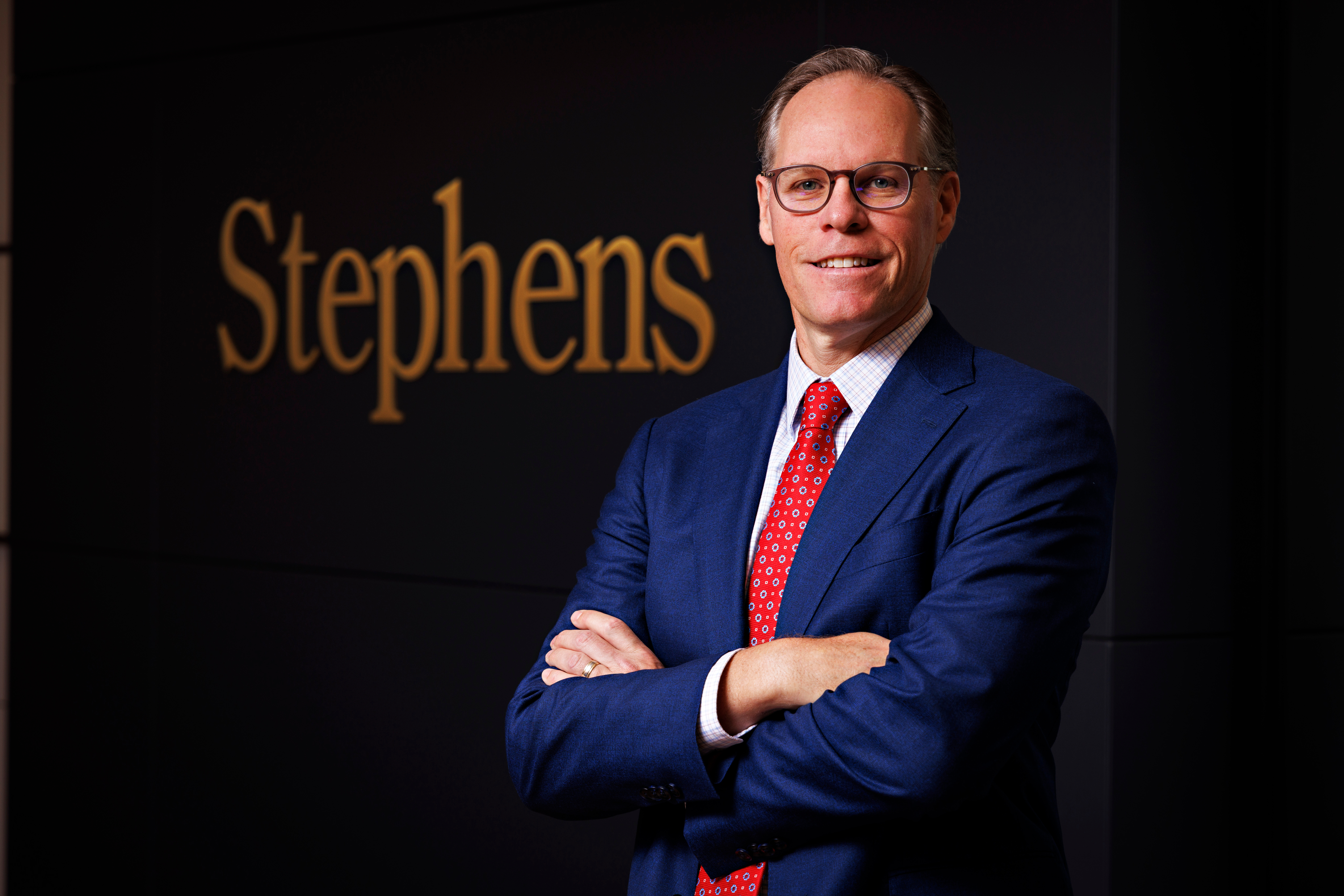
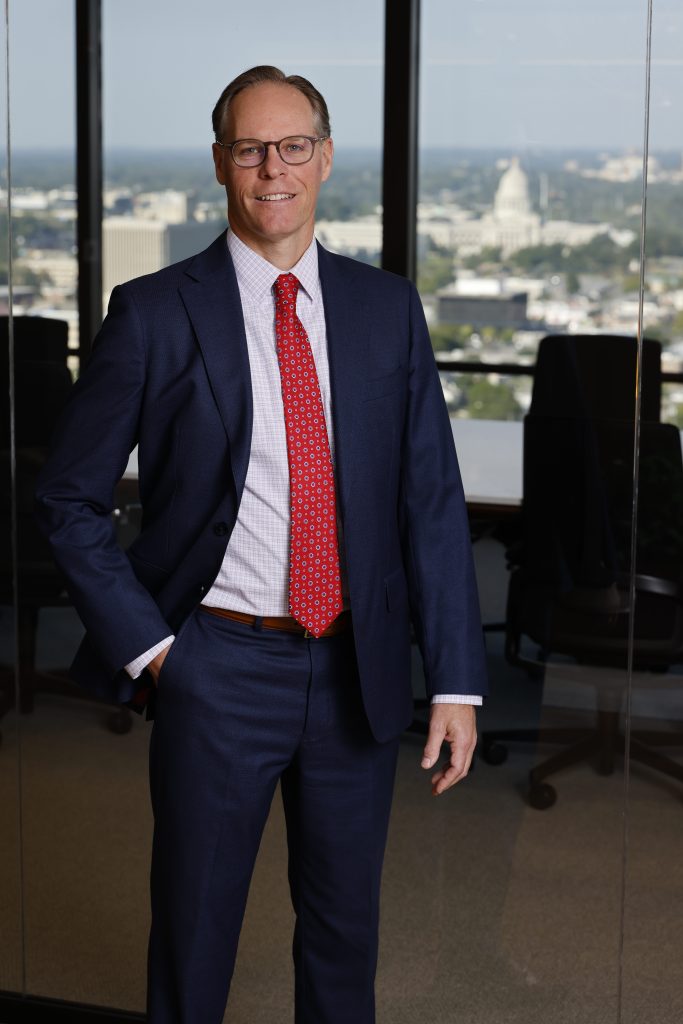
The Future is Bright for Partnerships For Doug Seelicke at Stephens Inc., trust and stellar service strengthen advisor-client relationships.
When it comes to philanthropy, professional advisors play a vital role in connecting clients’ financial goals with their desire to make a difference. For Doug Seelicke, an investment advisor at Stephens Inc. and a former attorney, that balance is at the heart of his work.
“My role is to help clients preserve and grow assets for their families and future generations and satisfy their desire to give back,” he said. “Philanthropy isn’t an either-or. It can do both.”
Seelicke regularly refers clients to the Community Foundation, where donor advised funds and other giving vehicles provide a seamless way to integrate charitable giving into financial planning. What gives him confidence in making those referrals is simple: trust.
“I can’t introduce my clients to a service provider unless I can rely on their level of service,” Seelicke said. “With Arkansas Community Foundation, that trust is always there. They provide stellar service, both to me as the advisor and directly to my clients. Their professionalism and responsiveness go a long way.”
It isn’t just about managing paperwork. It’s about a meaningful partnership and building relationships. “The Foundation simplifies the administrative and compliance aspects of philanthropy,” he said. “That allows me to focus on growing my clients’ wealth while still helping them realize their charitable goals. They are a great partner for advisors.”
One client experience stands out. Late in the calendar year, a family experienced a significant liquidity event and needed to establish a donor advised fund quickly to benefit from tax planning.
“Time was of the essence,” Seelicke recalled. “The staff at the Foundation took an all-hands-on-deck approach. Everything was completed in just a matter of days. My client and I were deeply appreciative, not only of the speed and efficiency, but also of the local knowledge the Foundation staff provided. And they were able to connect that family with other like-minded philanthropists and causes in their community, which really made an impression.”
For Seelicke, experiences like this confirm that working through the Community Foundation is a value-add. I view it as managing the money on behalf of my clients through Arkansas Community Foundation, for the benefit of my clients and their communities. It’s not a loss at all. In fact, I’d say it helps me build stronger relationships with my clients.”
That belief ties directly to Stephens Inc.’s broader commitment to Arkansas. As a family-owned firm with deep roots in the state, Stephens has long viewed giving back as part of its responsibility.
“Even though I wasn’t born here, I’ve lived here more than 16 years and raised my family here,” Seelicke said. “There’s a real sense of obligation to help those who need it and make our communities stronger. That mentality flows through the firm, from the top down.” For Seelicke personally, the most rewarding aspect of this work is watching clients experience the deeper meaning of their generosity.
“It’s fulfilling to see them realize that their wealth management is about more than just growing dollars,” he said. “They learn that they can do more and actually touch lives within their own communities. That, to me, is what makes the most impact.”
In June, we will transition to a new database for fundholders and grantees.