by Ashley Coldiron, Chief Development Officer

The One Big Beautiful Bill Act (OBBBA), signed into law on July 4, brings significant updates to charitable giving rules. We’re here to help you and your advisors make the most of them.

Key planning points:

  • 2025 may be the year to “bunch” your giving. With the standard deduction increasing to $15,750 (single) and $31,500 (joint), front-loading contributions to a donor-advised fund could boost tax savings.
  • New limits are coming. In 2026, deductions will only apply to giving above 0.5% of AGI. And if you’re in the highest tax bracket (37%) you can only deduct charitable contributions at the 35% rate.
  • Non-itemizer deduction returns in 2026. A new “above-the-line” deduction—$1,000 for individuals, $2,000 for couple will apply to certain cash gifts. Non-cash gifts and contributions to donor advised funds are excluded.
  • QCDs remain powerful. For those 70½+, Qualified Charitable Distributions from IRAs, up to $108,000/year, still offer unmatched tax efficiency.

Let’s talk about how to adapt your giving plans.

The One Big Beautiful Bill Act was signed into law by President Trump on July 4, 2025, after the House of Representatives approved the Senate’s changes to H.R. 1, which passed the House by a narrow margin in May. 

The OBBBA, with nearly 900 pages of provisions, reshapes policy across major sectors of the U.S. economy. Included in the OBBBA are several provisions that impact philanthropy. Three major takeaways are of particular importance as the Community Foundation helps donors, fund holders, and nonprofits, as well as attorneys, CPAs, and financial advisors–navigate charitable planning opportunities over the months and years ahead. 

(Notably, the OBBBA omits several provisions that appeared in previous versions of the legislation, such as a proposed increase to the net investment income tax on private foundations.) 

Insight #1: Standard deduction goes higher

What’s in the OBBBA?

The new law makes permanent the standard deduction increases under the Tax Cuts and Jobs Act of 2017 (TCJA), increasing the standard deduction for 2025 to $15,750 for single filers and $31,500 to taxpayers who are married and filing jointly. The new law also expands the “bonus” deduction for taxpayers 65 and older through 2028.

What’s more, under the new law, individuals who itemize may take charitable deductions only to the extent the charitable deductions exceed 0.5% of adjusted gross income. Furthermore, taxpayers in the top bracket can only claim a 35 percent tax deduction for charitable gifts instead of the full 37 percent that would otherwise apply to their income tax rate. Note also that the final bill permanently extended the 60% of adjusted gross income contribution limitation for cash gifts made to certain qualifying charities.

What does this mean for charitable giving?

With even fewer taxpayers eligible to itemize, and deductions capped for high-income earners, we’re likely to see a continuation of the chilling effect on charitable giving that occurred in the wake of the TCJA.

What can you do?

If you regularly support charities, it’s important to continue to do so whether or not you’re benefiting from a tax deduction. Our community needs you, now more than ever. If you’re a nonprofit, or if you’re an attorney, CPA, or financial advisor who works with charitable clients, remember that people do not give to charity solely to secure a tax deduction. Keep in mind that many other factors motivate charitable giving, and philanthropy is an important priority for many families. (This article in the Stanford Social Innovation Review has stood the test of time.)

Insight #2: Deduction for non-itemizers

What’s in the OBBA?

The new law includes a provision, effective after 2025, allowing non-itemizers to take a charitable deduction of $1,000 for single filers and $2,000 for taxpayers who are married and filing jointly. As has been the case in the past, gifts to donor-advised funds are not eligible. Unlike a previous (but smaller) similar provision, though, this law is not set to sunset. 

What does this mean for charitable giving?

After the TCJA went into effect, households that itemize deductions dropped to under 10%. Parallel to this trend, the number of U.S. adults who give to charity in any given year has dropped over the last 20 years from nearly two-thirds to less than half, according to some studies. Against this backdrop, the OBBBA’s deduction for non-itemizers has the potential to re-motivate charitable giving among a significant number of households. 

What can you do?

For everyone, now is the time to take a serious look at your charitable giving plans to support the causes you care about over the years ahead, especially if you are early in your career and not yet itemizing deductions. If you’ve already established a fund or you’re working with the Community Foundation in another way, please reach out to learn how we can help you make the most of the new tax laws, and even get your children and grandchildren involved. If you’re a nonprofit, now is the time to attract and engage brand new donors. And if you’re an attorney, CPA, or financial advisor, make sure you talk about charitable giving with your clients who don’t itemize; a $1000 or $2000 deduction could be just the motivation they need to begin a journey of philanthropy. 

Insight#3: No sunsetting estate tax exemption

What’s in the OBBA?

For affluent taxpayers updating financial and estate plans, and for the attorneys, CPAs, and wealth managers advising them, the last couple of years have been a roller coaster because of the looming possibility that the TCJA’s increase to the estate tax exemption would sunset at the end of 2025. Finally, there is clarity: Under the OBBBA, the sunset will not happen. The new law makes permanent the increase in the unified credit and generation-skipping transfer tax exemption threshold. The 2025 exemption is $13.99 million for single filers and $27.98 million married filing jointly. In 2026, these numbers increase to $15 million and $30 million respectively.

What does this mean for charitable giving?

Purely estate tax-based incentives to give to charity continue to apply only to the ultra-wealthy, likely resulting in a continuation of the taxpayer behavior triggered by the TCJA. In other words, most people will give to charity during their lifetimes and in their estates for reasons other than a tax deduction.

What can you do?

There is no guarantee that the estate tax exemption will stay high forever. As families work with their tax and estate planning advisors, many are viewing the next two years as an important window to plan ahead. The upshot of the new law is that high net-worth taxpayers now have more time to thoughtfully consider estate planning strategies, including charitable giving. For nonprofit organizations, this means continuing to focus on long-term planned giving strategies is wise.   
By Jody Dilday, Philanthropic Advisor

Wouldn’t it be helpful to read your clients’ minds? Especially when it comes to understanding their values, goals, and charitable intent.

Good news: You don’t have to guess. Research provides helpful insights into what motivates charitable clients, and how you can meet them where they are.

Consider this: In 2024 alone, Americans gave an estimated $592.5 billion to U.S. charities, according to Giving USA. That’s a powerful indicator that philanthropy is alive and well. In fact, more than 85% of affluent households give to charity each year.

So what’s driving this generosity? Here are a few key mindsets your clients may already have:

“We want to make the world better, starting here at home.”
People are more likely to give to local causes. A study from the University of Chicago Booth School of Business found that donors are significantly more inclined to support local charities over national or international ones. At the Community Foundation, we see this every day as donors work with us to make a difference in the places they call home. We’re here to help your clients support local causes in thoughtful and effective ways.

“Giving makes us feel good.”
Charitable giving isn’t just good for the world, it’s good for your clients, too. Studies show that philanthropy has both emotional and physical benefits. That’s in stark contrast to the often stressful experience of estate planning, which can bring up concerns about mortality, family conflict, or financial uncertainty. By weaving charitable giving into the process, you help create a more positive, purpose-driven experience.

“We want to know our giving really matters.”
Your clients want more than a tax deduction, they want to make a difference. Today’s philanthropists are eager to address complex issues and support long-term solutions. Many are rethinking their role, looking beyond immediate gifts to long-term strategies that sustain change over time. That might include establishing an endowment, setting up a donor advised fund, or even engaging in advocacy.

At the Community Foundation, we stay closely connected with a broad network of nonprofits across the state. We know where the needs are, and how your clients can align their giving to achieve meaningful impact.

Let’s talk. We’re here to support you and your clients in making charitable giving more strategic, joyful, and rewarding.

By Lesley Roberts, Philanthropic Advisor

As an estate planning, tax, or wealth advisor, you play a key role in helping your clients make the most of their charitable giving, maximizing both impact and tax benefits. But according to a 2023 survey, just 19.2% of advisors bring up charitable giving regularly with clients, and 44.2% do so only occasionally.

That’s where the Community Foundation can help.

We’re here to serve as your charitable sounding board. When a client expresses interest in giving, or when you’re exploring strategies together, just loop us in. We’ll help you navigate the options, crunch the numbers, and tailor a plan that fits your client’s goals.

Of course, you still have to start the conversation. One easy way is by talking about the benefits of giving appreciated assets, like stock or real estate, to a fund at the Community Foundation. To illustrate, consider this hypothetical example:

Meet Jane.
She earns more than $500,000 a year and wants to donate $10,000 to the Community Foundation’s local Giving Tree Endowment. Jane holds Apple stock purchased more than 20 years ago, now worth far more than she paid for it. She also has plenty of cash on hand. Jane is weighing two options:

  • Write a check for $10,000
  • Transfer $10,000 worth of Apple stock

As her advisor, you already know the smarter tax move is to donate the stock, but here’s how you might explain it with real numbers:

  • Jane’s income places her in the 37% federal marginal tax bracket and a 23.8% long-term capital gains tax rate (20% + 3.8% Net Investment Income Tax).
  • She itemizes deductions and has a cost basis of $2,000 in the Apple shares she’s considering donating.

Option 1: Give Cash

  • Charitable deduction: $10,000
  • Federal tax savings: $3,700
  • Net cost of gift: $6,300

Option 2: Give Stock

  • Avoids $8,000 in capital gains
  • Capital gains tax avoided: $1,904
  • Federal tax savings: $3,700
  • Net cost of gift: $4,396

The takeaway?
Either way, Jane gives $10,000 to charity. But writing a check costs her $6,300. Donating stock? Just $4,396. That’s nearly $2,000 in additional tax benefit, and a clear win for both Jane and the causes she cares about.

Donating appreciated assets is just one of many charitable strategies your clients can use. These conversations often lead to deeper planning around lifetime giving, legacy goals, engaging the next generation, and more.

Let us know how we can help. We’re always happy to share strategies and examples to help your clients give wisely, and with greater impact.

by Ashley Coldiron, Chief Development Officer

There’s been a lot of buzz around H.R. 1 (the “Big Beautiful Bill”)  which passed the U.S. House on May 22 by a narrow vote. As it heads to the Senate, changes are expected—so nothing is final yet. Still, it’s smart to be aware of provisions that could affect charitable giving.

Here’s what we’re watching—and how it might matter to you:

  • Estate Tax Exemptions. The current individual exemption of 13.99M ($27.98M for couples) is set to sunset at the end of 2025. Under the proposed legislation, these higher exemptions would become permanent. Either way, charitable gifts can be an effective tool for managing estate taxes and leaving a legacy aligned with your values.
  • Standard Deduction. The bill proposes extending the higher standard deduction levels through 2028, with a modest “above-the-line” eduction for charitable gifts: $150 for individuals or $300 for joint filers. While most people give for reasons beyond tax savings, we’re here to help you structure giving that works for your financial and philanthropic goals.
  • Private Foundation Excise Taxes. Proposed changes would increase taxes on large private foundation investment income, but foundations under $50 million in assets would not be affected. Donor advised funds at the Community Foundation offer a flexible alternative—with less regulation and lower cost.

So what’s next? The Senate is expected to begin reviewing the bill in June, with potential action stretching into late summer. We’re watching closely and will keep you updated.

In the meantime, if you’re updating your estate plan or exploring new ways to give, reach out. We’d be honored to partner with you and your advisors to help you make a meaningful, lasting difference.

by Lesley Robers, Philanthropic Advisor

As charitable giving becomes a bigger part of life for individuals, families, and businesses, it can be overwhelming to navigate your options and decide where to start.

The good news? Giving doesn’t have to be complicated.

When you work with the Community Foundation, you get:

  • Personalized service from real people who care
  • A simple process to establish your fund (in as little as an hour!)
  • Expert support that helps you maximize impact and joy

Here’s what donors often say after getting started:

“We had no idea it would be so easy. We wish we had done this years ago.”
“It’s refreshing to talk to people in Arkansas, instead of someone in a call center”
“We feel connected to something bigger—part of a local family of giving.”

And it’s not just about service—it’s about simplicity and flexibility. We take care of the administrative details, from tax receipts to grant processing. For example, when you contribute appreciated stock to a donor advised fund, you receive one receipt, even if you support 10 different charities. We also handle IRS documentation and acknowledgments, so your records stay organized.

Even better, we accept a wide variety of assets—cash, stock, real estate, business interests, retirement accounts, and more—helping you give in the most tax-efficient way.

Whether you’re considering a new gift, planning your legacy, or just want to talk through your options, we’re here for you every step of the way.

by Jody Dilday, Philanthropic Advisor

The word “philanthropist” can sound lofty—reserved for billionaires like Bill Gates or MacKenzie Scott. But the truth is, anyone who makes an effort to improve the lives of others is a philanthropist, and that includes YOU.

At the Community Foundation, we believe everyone can be a philanthropist. It’s at the heart of our mission to improve quality of life in Arkansas.

Here are just a few ways people begin their philanthropic journey:

  • Volunteering—packing backpacks for kids, sorting donations, or serving meals
  • Attending community events
  • Participating in a food drive, or supporting a school fundraiser
  • Serving on a nonprofit board or committee
  • Giving online to support urgent needs or disaster relief
  • Rounding up at checkout or supporting a giving circle

As people continue their journey, many choose to formalize their giving with a donor advised fund or another type of charitable fund.  This helps simplify donations to multiple organizations, consolidate tax receipts, and align giving with long-term goals.

If you’re looking for inspiration, take a look at the recently released TIME100 Philanthropy 2025 list. It celebrates not just high-dollar donors, but also community leaders, advocates, and changemakers who are using their resources and voices to make a difference—whether through books (Dolly Parton), food (José Andrés), or advocacy (Billie Jean King).

Philanthropy today is more accessible than ever—with tools like collective giving, strategic partnerships, and donor advised funds. If you’re thinking about your next step, we’re here to help.

Little Rock, Ark. (June 5, 2025) – Arkansas Black Hall of Fame Foundation (ABHOF) awarded $55,000 in grants to 20 nonprofits with programs benefiting under-served communities in an online grant presentation May 29. These grants support projects focused on education, health and wellness, youth development, strengthening families and economic development in Arkansas.

“We are proud to continue our support of exceptional nonprofit organizations in Arkansas through this grant program,” said Charles Stewart, chairman of the Arkansas Black Hall of Fame Foundation. “Now more than ever, their work is essential to building stronger, more resilient communities. These organizations embody what we are working to accomplish at the ABHOF, and we are honored to stand alongside them in advancing opportunity throughout our state.”

This year’s grant recipients:

  • AR Repertory Theater
  • Arkansas Women’s Outreach
  • City Connections Inc
  • CityYouth Ministries
  • Compassionately Connected for Veterans
  • Conway Cradle Care
  • Depaul USA
  • The Diaper Storehouse
  • Family Development Center
  • Feed My Sheep Soup Kitchen
  • Girls on the Run of Central Arkansas
  • HGA – Humanitarian Global Alliance
  • Life Skills for Youth
  • Little Rock Diamond Foundation
  • Our House
  • Positive Outreach with Effective Results
  • Prevention Education Programs Inc.
  • Prison Yoga Project
  • Village Public Health Training Center
  • We Are Washington

Arkansas Black Hall of Fame Foundation aims to provide an environment in which future generations of African American achievers with Arkansas roots will thrive and succeed. Arkansas Black Hall of Fame honors the contributions of African Americans through its annual Black Hall of Fame induction ceremony, and awards grants to support charitable endeavors in underserved communities. Learn more at www.arblackhalloffame.org.

###

Arkansas Community Foundation, a statewide nonprofit organization, provides resources, insight and inspiration to build stronger Arkansas communities – communities where our kids will want to raise their kids. The Community Foundation is the largest grantmaker in the state in the number of grants made each year. Since 1976, the Foundation has awarded more than half a billion in grants to nonprofits. Serving local communities through a 29-affiliate network along with statewide initiatives, the Foundation staff works directly with donors, professional advisors and nonprofits to help strengthen Arkansas communities through strategic philanthropy and focusing on local needs. Its assets rank among the top 60 of community foundations in the United States with more than $800 million in charitable assets under management.

Written by Missy Moore and Rainey Gibson Leathers – Friends of the Animal Village Board of Directors/Volunteers

Friends of the Animal Village (FAV) is a nonprofit organization that was created to supplement the needs of the Little Rock Animal Village (LRAV), the city shelter and home of Little Rock Animal Services. The LRAV staff provides excellent day-to-day care for all animals in their charge, as well as for the facility itself. Given that there are 200+ animals in their care at any given time, the nonprofit is stretched thin and unable to tend to all the animals in their care for daily socialization and training. That’s where our volunteers come in.

New volunteers are trained monthly by LRAV staff and FAV board members and provide crucial assistance in socializing and walking dogs, socializing cats, fostering kittens, taking and posting photographs to social media to boost visibility and adoption chances, handling cats and dogs at fundraising and adoption events, and transporting cats and dogs to other shelters and rescues around the country.

The shelter is constantly over capacity, and volunteers are needed more than ever. The demand puts a strain on resources, morale, and an already exhausted staff. Due to the nature of a municipal shelter, LRAV is required to accept every stray found within city limits. When the intake numbers are larger than the adoption numbers, as is often the case, the shelter runs out of space and heart-wrenching decisions must be made. No one wants to see amazing dogs not make it out of the shelter due to lack of space, but it is a devastating reality we face every week. It is often heartbreaking.

What are other ways to lessen the demand on local shelters? LRAV would benefit greatly from post-adoption follow up resources, microchip readers stationed in central locations around the city to help reunite chipped pets with their owners, additional staff, restoration of the mobile adoption unit, a larger facility with more kennels and increased pay for shelter staff. Training opportunities are also needed for staff members to become specialized in different domains, including consistent and thorough behavioral assessments to make sure animals are safe to adopt out. Many dogs do not leave the shelter due to perceived aggression, which is difficult to accurately assess in a crowded, stressful environment.

If you are anticipating significant life changes (moving, having a baby, etc.) or you do not feel you have adequate financial resources to provide food, shelter, and heartworm, flea, and tick preventatives for your pet, please consider volunteering rather than adopting. Pets are a significant commitment, and we see so many “owner surrenders,” sometimes immediately after adopting. The stress of these rapid changes can make even the most gentle dogs deeply anxious and unhappy, which leads to unpredictable behavior and negative outcomes.

We also hope for updated legislation for spay and neuter laws and harsher penalties for backyard breeders, dogfighting, hoarders, and situations involving abuse and neglect. With pit bull breeds remaining a hot-button issue that rears its head from time to time, it is crucial we find ways to protect both adopters and adoptees without unfairly vilifying large groups of dogs.

So how can you help? Most Arkansas communities have an animal shelter that can use more support. Reach out and ask what they need. Most, including LRAV, have an Amazon and Chewy wish list to browse, and are always in need of supplies and monetary donations. If you’re local to Little Rock, please consider joining us for volunteer orientation held the second Saturday of every month at 4500 Kramer St.

Without community support, our efforts rapidly dwindle in the face of overcrowding, and without volunteers, the work is endlessly uphill. If you cannot make it to the shelter, citizens can ensure that their own pets are sterilized, “adopt don’t shop” or contact your nearest animal rescue and just ask, “How can I help?” There are always creative ways to support animal shelters.

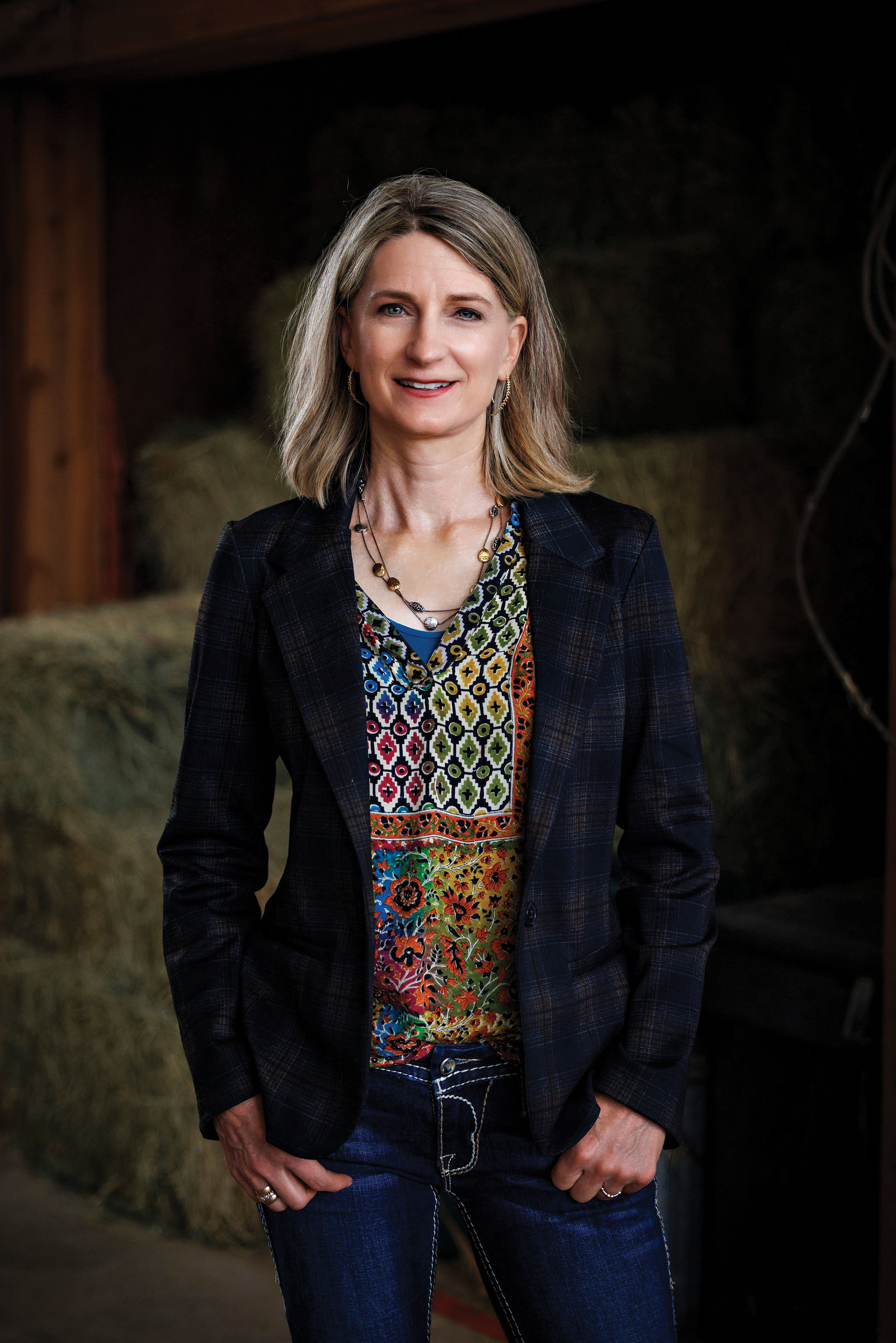
For Ellon Cockrill of Little Rock, a lifetime of volunteerism has been more than a way to give back, it has been a masterclass in leadership, resilience and building community.

“Everything I learned through volunteering prepared me for where I am now,” Cockrill says. Today, she manages multiple farms in the Arkansas Delta, leading them toward profitability after years of struggle. She credits her volunteer experience with honing critical leadership skills: financial stewardship, strategic planning, communication, and the ability to build and lead strong teams. “I never thought I would be running a farm, but here I am.”

Ellon Cockrill

Cockrill’s decades of service span a wide range of organizations, many in central Arkansas, from the Centers for Youth and Families, the Women’s Foundation of Arkansas, the Alzheimer’s Association and the Arkansas Hunger Relief Alliance to Home for Healing. Her commitment has not only helped raise millions of dollars, like the $32 million she helped secure for UAMS’s Psychiatric Research Institute, far exceeding the original $3 million goal, but has also built a network of changemakers, many of whom have gone on to lead major nonprofits themselves.

Cockrill’s philosophy is simple: give 100% and surround yourself with people smarter than you. She believes that teamwork and the willingness to embrace change are key to meaningful progress. She says “Every time I’m asked to volunteer, I want to know: ‘Are you willing to do something different than you’ve always one?’ If the answer is yes, I’m usually in. There
is so much power in teamwork. Any success I’ve had as a volunteer or philanthropist is because of good teams around me.”

One of Cockrill’s favorite parts of volunteerism is witnessing the unexpected potential in people. “When it comes to volunteering, those you think can’t help often surprise you. I love when that happens.”

Her passion is especially evident in her work with vulnerable populations, like the homeless, the hungry and the addicted. “Those who are often forgotten or ignored are the ones I want to help most,” she admits.

Her commitment to help goes beyond volunteering, it also extends to her philanthropy. Through Arkansas Community Foundation, Cockrill pools her donations with others to maximize their impact. “I could never make my philanthropic dollars stretch so far on my own,” she says.

For Ellon Cockrill, volunteerism is not just a way to contribute, it’s a way to grow, to lead, and to transform lives, including her own.